
Anyone researching cosmetics manufacturing runs into “OEM” and “ODM” almost immediately, but the practical difference between them often isn’t clear. Here’s a breakdown from a brand’s decision-making perspective.
The core difference: who drives the formula and design
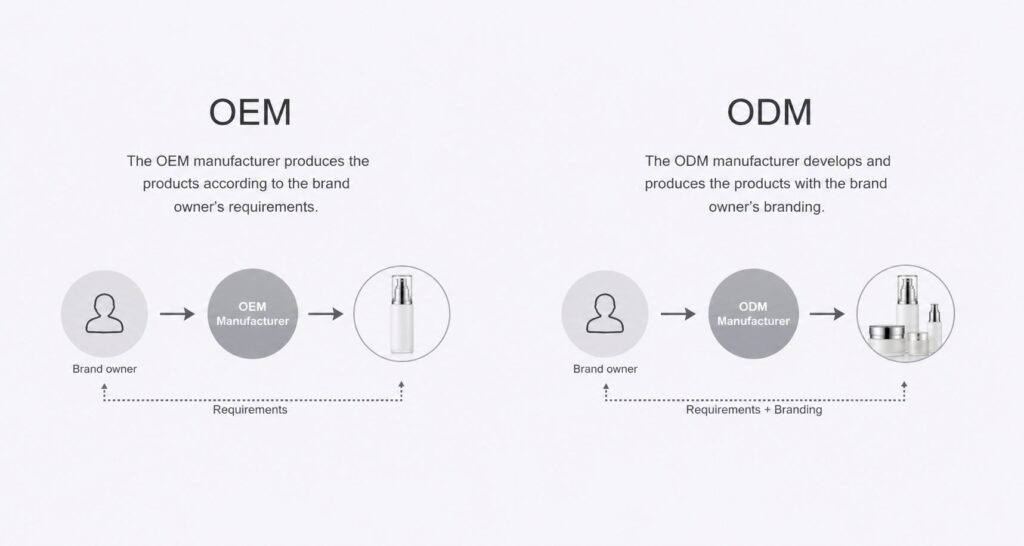
OEM (Original Equipment Manufacturer): the brand supplies a complete formula and packaging specification, and the factory manufactures to that spec. The brand retains full control over every detail of the product.
ODM (Original Design Manufacturer): the factory leads formula R&D and product design. The brand chooses a direction from the factory’s existing formula library or development capability, the factory develops the product from scratch, and the brand focuses on brand positioning and final sign-off.
When OEM makes sense
- The brand already has a defined formula (developed in-house or via a third-party lab)
- Very specific requirements on ingredients or texture that shouldn’t be constrained by a factory’s existing formula catalog
- The team has real in-house product development capability and just needs manufacturing capacity
When ODM makes sense
- The brand wants to move from concept to finished product quickly, shortening the R&D timeline
- The team lacks dedicated formula R&D capability and wants to lean on the factory’s proven formula library and technical know-how
- The goal is a differentiated variation on an existing product line (a new scent, a texture tweak, an added active ingredient)
It doesn’t have to be either/or
Plenty of brands run a hybrid approach in practice: OEM for a hero SKU where formula uniqueness matters most, ODM for supporting categories where speed to market matters more. Which model fits best ultimately comes down to how a brand weighs formula ownership against time-to-market.
Whichever model you choose, nailing down IP ownership up front — whether the formula is exclusive, and whether the factory can reuse it for other clients — is something to settle before signing, not after.